Showing posts with label Early Purple Orchid. Show all posts

Friday, 22 April 2022

20th April - The Warmer Weather's So Much Finer

The Easter Holiday weekend saw some beautiful weather with the hottest day of the year so far on Good Friday and four days of wall to wall sunshine and glorious azure blue skies.  And where was I?  Well working in the garden!  This though did present some opportunity with two new butterflies for the year making their way across the garden.  On the 16th a Holly Blue and on the 18th a male Orange Tip.  Neither of course stopped and even if they had of I didn't have a camera close by.

While the temperatures dropped off into the week, the sunshine remained and this provided the opportunity for an afternoon walk.  I was hoping for some afternoon butterflies after having seen another Holly Blue in the garden, but they were conspicuous by their absence throughout the walk.

I headed along Brislands Lane and stopped at the junction with Gradwell Lane when I heard a familiar song.  It was another Firecrest and showed well in the bushes along the road side.

I thought I would take the opportunity to give some background to the Firecrest.  This tiny, restless jewel of a bird vies with the Goldcrest for the title of the UK's smallest bird. Compared to the Goldcrest, the Firecrest is brighter and 'cleaner' looking, with a green back, white belly, bronze 'collar' and a black and white eye-stripe. They have a yellow and black stripe on their heads, which has a bright orange centre in males. Like Goldcrests, they move through trees and bushes in search of small insects.
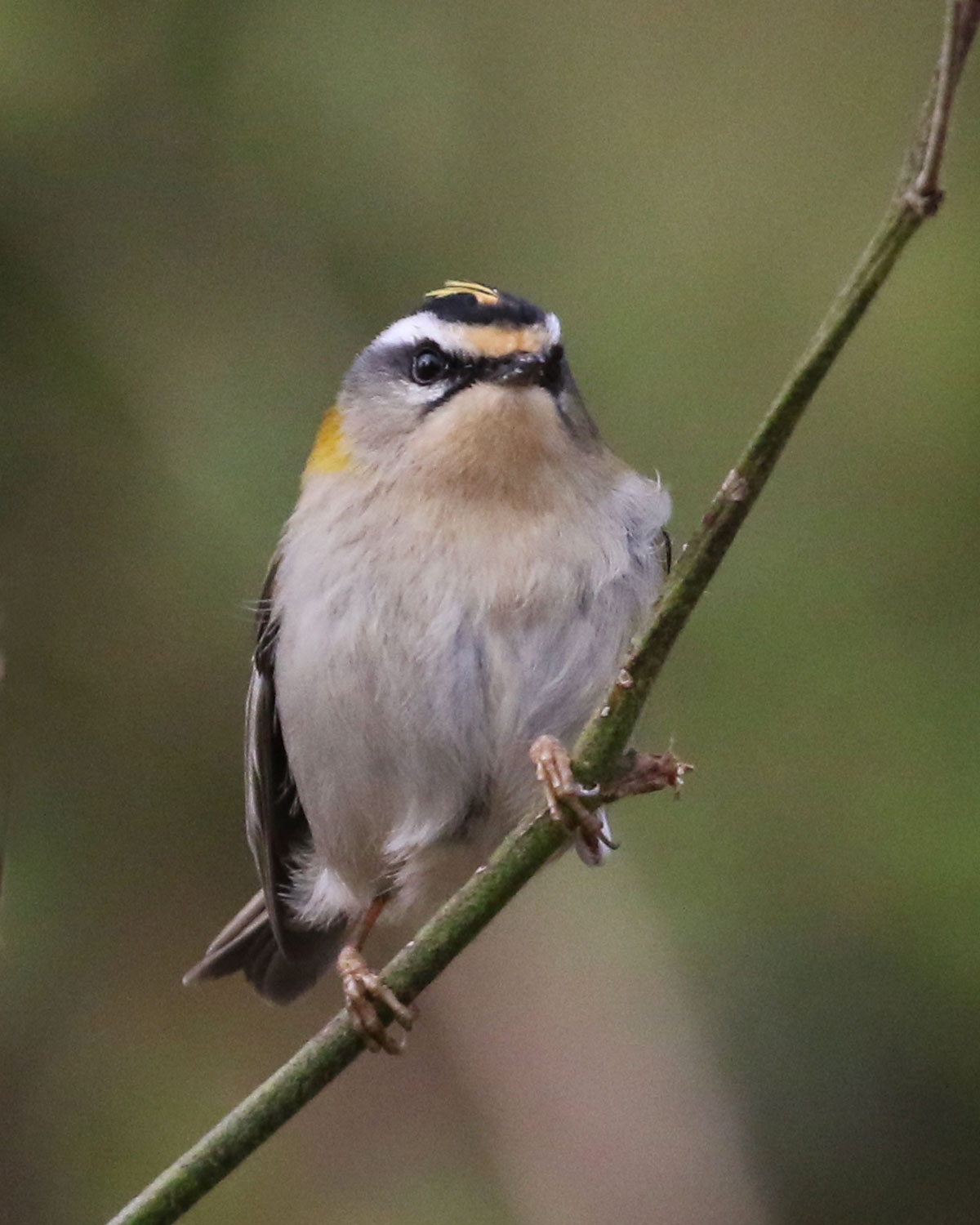

A member of the Kinglet family, the Firecrest's scientific name has a royal ring to it. Regulus ignicapilla translates roughly as the fire-capped little king, a reference to the beautiful orange crown of the male.


The Firecrest is monogamous. The male sings during the breeding season, often with its crest raised, and has a display which involves pointing its bill at another bird, showing the crest and strong face pattern. This differs from the display of the plainer-faced Goldcrest, which bows its head to emphasise the crest.


The breeding territory is about 1.2 acres and may overlap with neighbouring Goldcrest territories. Firecrest will sometimes defend their territories against Goldcrests with the crest raised and a great deal of wing-fluttering, but the amount of actual competition between the species may not be very great.

Unlike more specialised woodland birds which forage on trunks, the crests do not need large woodlands, and their population density is independent of forest size. In winter the Firecrest is less reliant on conifers than the Goldcrest, moving from forest to fringes and scrub. It occurs singly or in pairs, spending much time in the tree canopy, although frequently venturing into bushes and other lower vegetation.


The first breeding of Firecrests in the UK was observed in Hampshire back in 1962.  Since then the species was more likely to be seen on migration, but just recently breeding numbers have significantly increased.  Current figures suggest over 500 breeding pairs but the likelihood is that this number is far greater.  Firecrests thrive in fairly urban areas on the continent, provided that suitable habitat is available in parks or large gardens.  Locally around Four Marks they are more likely to be found in gardens, showing a preference to Holly trees rather than the dense conifers

Leaving the Firecrest I continued out into the open fields away from the houses and gardens.  In the field alongside Old Down Wood there was a group of what I thought initially were Woodpigeons, but as they flew I realised they were Stock Dove.  I flight I was able to count them, there were 19 in total, by far the highest number I have seen on the patch.

Fortunately the Stock Dove flew around and settled back into the field and I was able to get some records of them, both from the road

And from the path that leads into Old Down Wood.


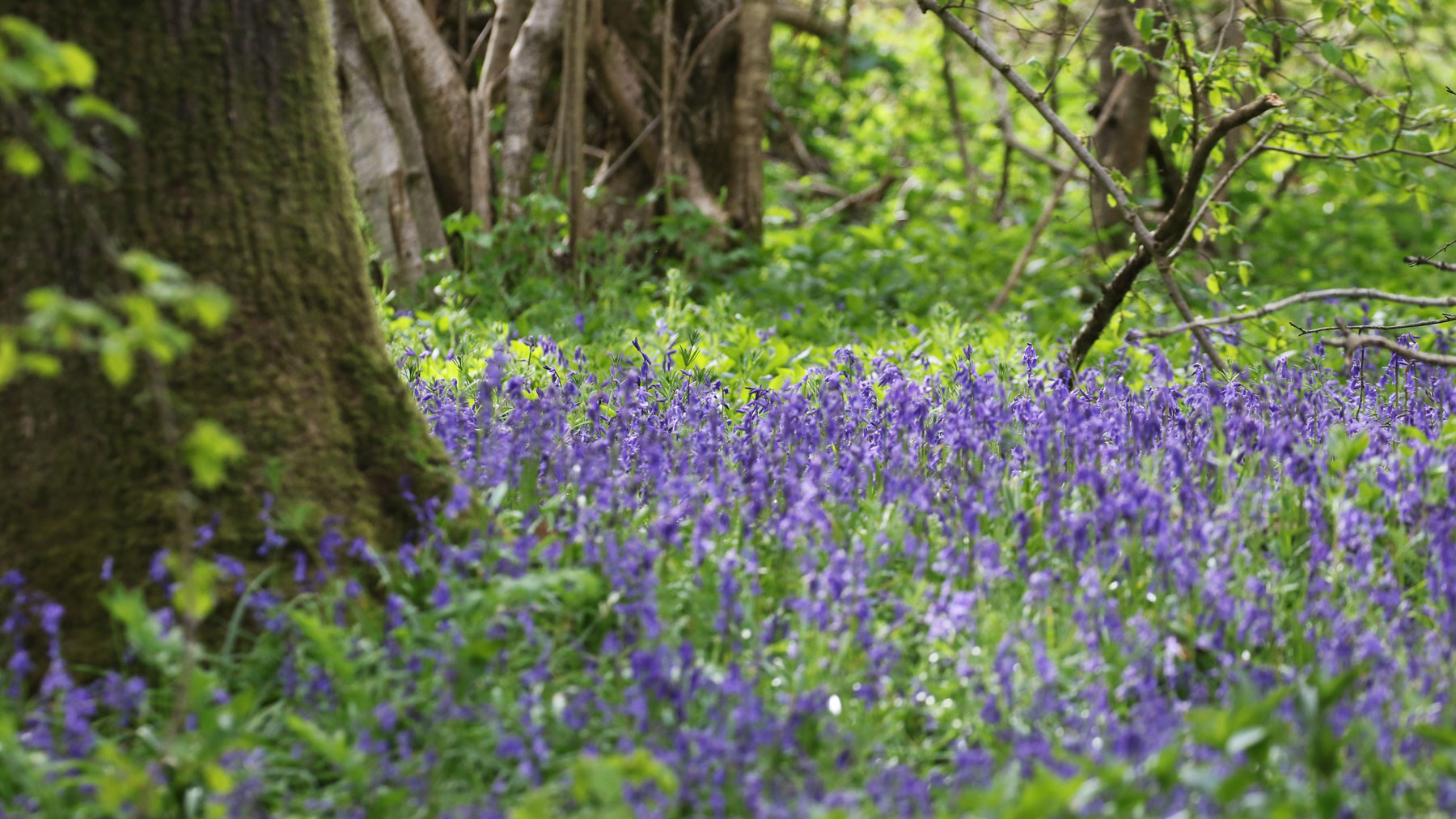
I took the perimeter path to take in the Bluebells that were now coming through, I would estimate that they are currently at about 50% emerged, the blue haze still entwined with the green.  Here is a selection of the best views as I walked around.


One other plant I was looking for was the Early Purple Orchid.  As you can see it is yet to flower, but won't be far off.

A Yellowhammer called from the top of the trees on the edge of the wood.  It is not usual to see them here so the numbers must be expanding.

While there were a few Blackcaps singing amongst the resident Robins, Wren, Blackbirds and Song Thrushes, the dominant singer was the Chiffchaff.  Setting up territories, their songs were essential in letting those that look to move in and take over.


This is the best time of year to photograph them with just the emerging leaves to provide the scenic accessories


This shows very clearly the short primary projection of the Chiffchaff aside from song one of the more reliable ways of telling the Chiffchaff from the closely related Willow Warbler.

It was a pleasant two hour walk, only shame was the sun decided to hide behind clouds and there were no butterflies.

Monday, 17 May 2021

1st -15th May - There Is a Silent Eloquence In Every Wild Bluebell

 April was one of the driest April on record and probably one of the coldest too with night frosts and cold biting winds.  So what of May then?  Well it seems that once again Mother Nature is all about righting the wrongs of April and delivering more rain to even things out.  The cold conditions continued but with, sometimes heavy, showers.  The first half of May being much more like April showers.

The weather then has had an impact on the wildlife with flowers at least ten to fourteen days behind where they were last year, butterflies severely reduced and migrants held up on their journey north with very few Swallows and House Martins to be seen around the village.  Eventually the Bluebells burst into flower and Old Down wood was once again carpeted by these beautiful flowers.  Even the small area of Old Down Wood shows a variation in the flowering of these flowers, with those on the south side of the wood coming into bloom first.


No apologies for the amount of photographs of the scenes around the wood, the Bluebell season is restricted to about three weeks and you have to take advantage of this slot.

These from the north perimeter path area of the wood just past the Brislands Lane entrance.


This along the south west perimeter path


A white "bluebell" amongst the blues.


These from the north east perimeter path towards the middle of the month.


A lovely contrast of the blue and sunlit patches with the dark shadows


the footpaths around the wood are surrounded by the delicate greens of the emerging leaves and the blue hue of the bluebells.

Other flowers and plants are emerging around the wood.  As the leaves appear the canopy closes in and the light is restricted to the floor.  Dog Mercury and Solomon's Seal are beginning to replace the blue bells.  Wood Spurge can be found in clumps, the lime green leaves standing out in the darker patches.

In places the Wild Garlic or Ransoms is also starting to flower.  The best place to find this though is along Brisland's lane just past the entrance to the wood, it covers the side of the lane and the garlic fragrance is best just after a shower (which we have had a lot of!).

However the one flower I am looking for at this time of year is the Early Purple Orchid.  Their appearance is hit or miss with some years finding them along the perimeter path.  However there is always one in the same spot, the trick is to get there before someone tramples it down.  This year my timing was perfect.


As its name suggests, the Early purple orchid is one of our earliest flowering orchids, appearing from April to June. It is often found in habitats with non-acidic soils, such as hedgerows, banks, ancient woodland and open grassland. The pinkish-purple flowers appear on a spike of medium height.


The Tawny Owl is still to be seen in the usual tree and sometimes it is joined by its mate.  It is never easy to see and fortunately I would imagine it watches many persons walk by, oblivious of its presence.


A surprise walking along Brislands just past the Recreation Ground turn was a calling Stock Dove.  I managed to locate it in one of the taller trees.  This is the first time I have seen one away from the wood and pond.  This year is looking like a good year for them.


Firecrests are all now in song around the village.  I managed to find one in Goldcrest Way right in the middle of the new housing estate.  This one though is the well photographed bird along Brislands.


This is my favourite photograph so far this year.


A Nuthatch surprised me along Brislands too, foraging amongst the lichen.


I had my concerns about the Long-tailed Tit nest, but they seem to have been unnecessary.  Gradually over the days since the start of the month the nest appears to have swelled and I have been able to witness the adults bring food and actually taking it into the nest.


Second broods are now the story and many of the local birds are singing once again.  Robins, Blackbirds and this Song Thrush can all be heard in song.


I mentioned earlier that the Swallows and House Martins have been delayed, I was able to catch up with this Swallow hawking over the field alongside the footpath from Gradwell on the 10th, the first I have seen there this year.


A Treecreeper has been a regular visitor to the dead pine tree along the north-south footpath through the wood.

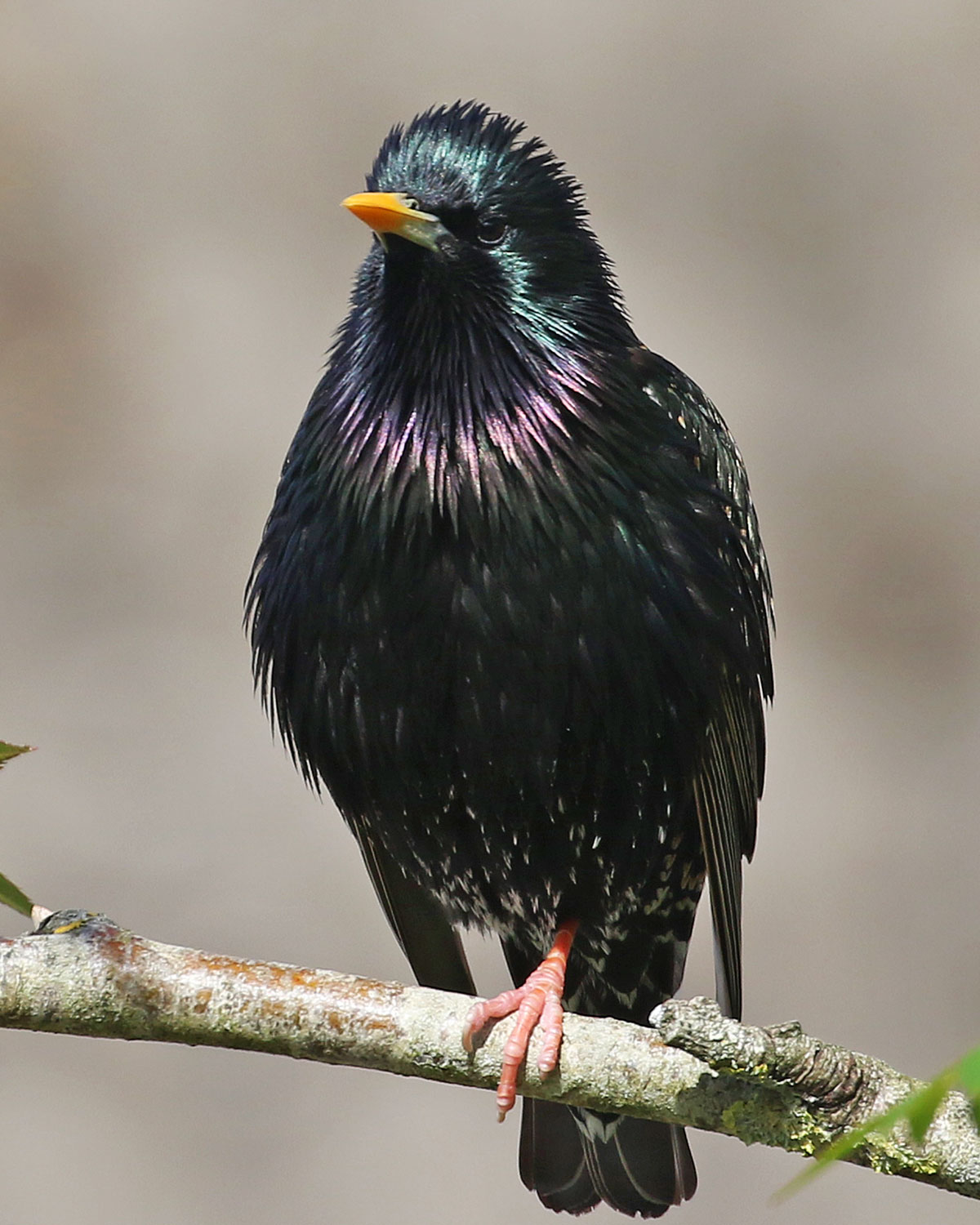
Juvenile starlings can be seen all around the houses and on lawns and one unfortunately fell to the resident Sparrowhawk in the garden.  The adults though have set about their second brood.  A male bird uses the same tree branch outside my office window to sing and display while I suspect its mate is sitting on another brood in the roof of the house.  In the afternoon when the sun comes out it highlights the beautiful iridescent petrol colours in the plumage of the starling.


And while we are the subject of second broods it looks like Donald's mate is sitting again.  Donald though comes to be fed on a regular basis, staring me out with this stare at me through the kitchen window.

While walking along the north east perimeter path I was able to get a view of the Four Trees along Brislands that have always caught my eye as I leave the wood walking towards Gradwell.  It was nice to see them in a different aspect.

Butterflies have been conspicuous by their absence, the only records being a Red Admiral, the first of the year, in Old Down Wood on the 10th and a Orange Tip and Small White through the garden on the 12th, all dodging showers and taking advantage of the warm sunshine.

Finally one animal that appears to be doing very well is the Rabbit.  The horse paddock alongside the footpath towards Gradwell Lane was covered in Rabbits with more than one on look out for the resident Buzzards in Old Down Wood.

Hopefully the latter half of the month will bring some more settled weather and some warmth, we shall see.