Showing posts with label Chiffchaff. Show all posts

Friday, 22 April 2022

20th April - The Warmer Weather's So Much Finer

The Easter Holiday weekend saw some beautiful weather with the hottest day of the year so far on Good Friday and four days of wall to wall sunshine and glorious azure blue skies.  And where was I?  Well working in the garden!  This though did present some opportunity with two new butterflies for the year making their way across the garden.  On the 16th a Holly Blue and on the 18th a male Orange Tip.  Neither of course stopped and even if they had of I didn't have a camera close by.

While the temperatures dropped off into the week, the sunshine remained and this provided the opportunity for an afternoon walk.  I was hoping for some afternoon butterflies after having seen another Holly Blue in the garden, but they were conspicuous by their absence throughout the walk.

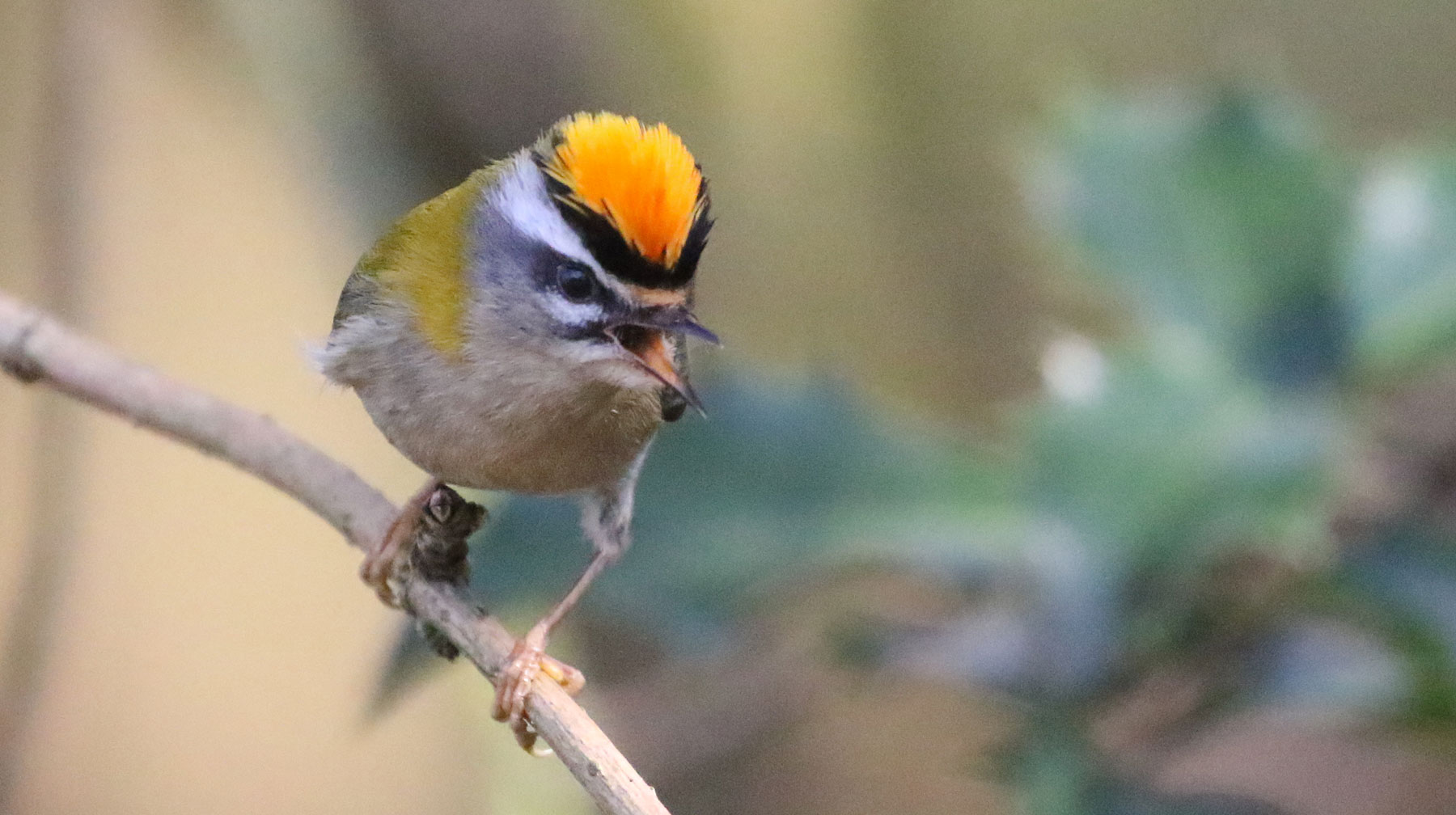
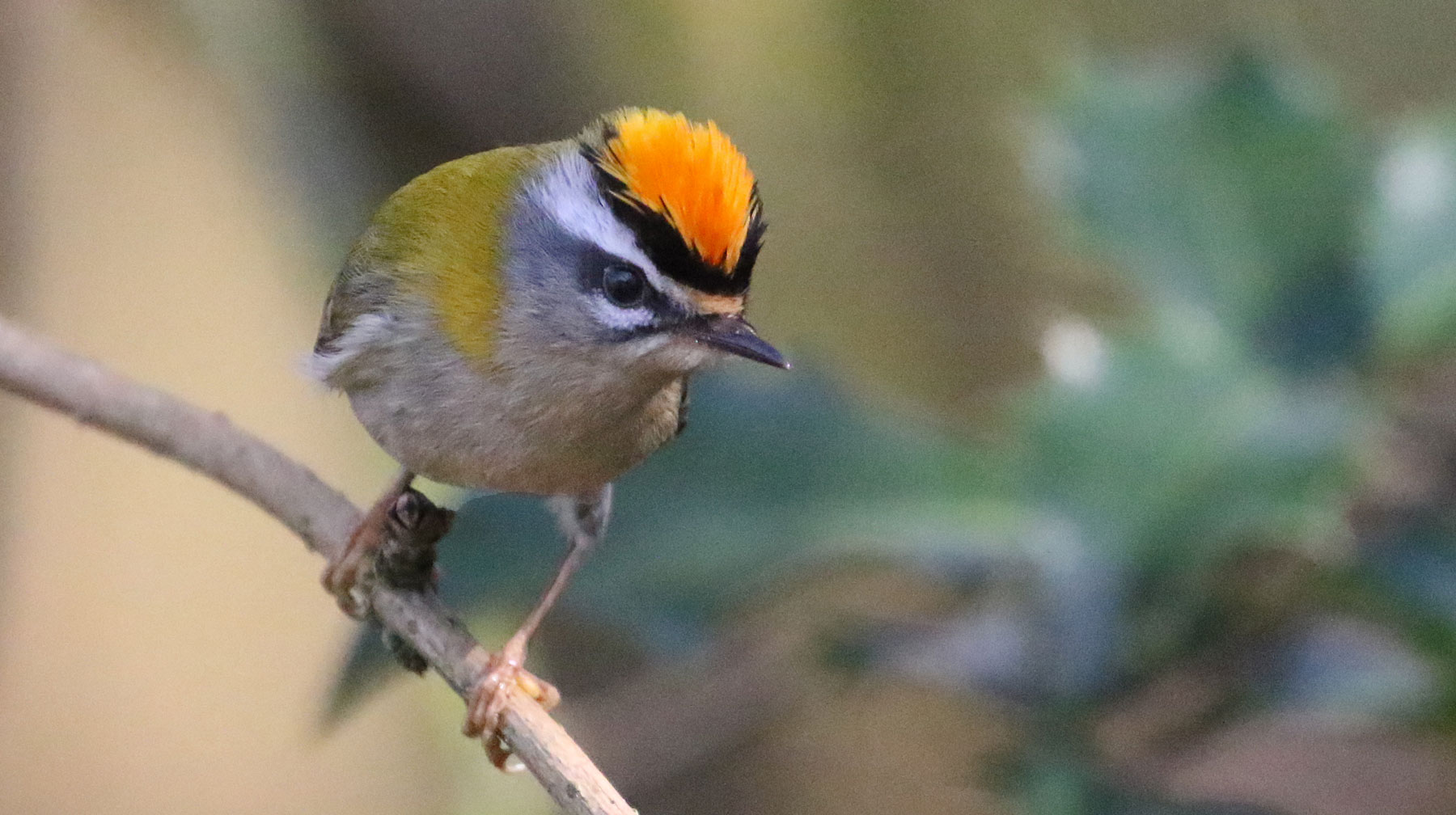
I headed along Brislands Lane and stopped at the junction with Gradwell Lane when I heard a familiar song.  It was another Firecrest and showed well in the bushes along the road side.

I thought I would take the opportunity to give some background to the Firecrest.  This tiny, restless jewel of a bird vies with the Goldcrest for the title of the UK's smallest bird. Compared to the Goldcrest, the Firecrest is brighter and 'cleaner' looking, with a green back, white belly, bronze 'collar' and a black and white eye-stripe. They have a yellow and black stripe on their heads, which has a bright orange centre in males. Like Goldcrests, they move through trees and bushes in search of small insects.
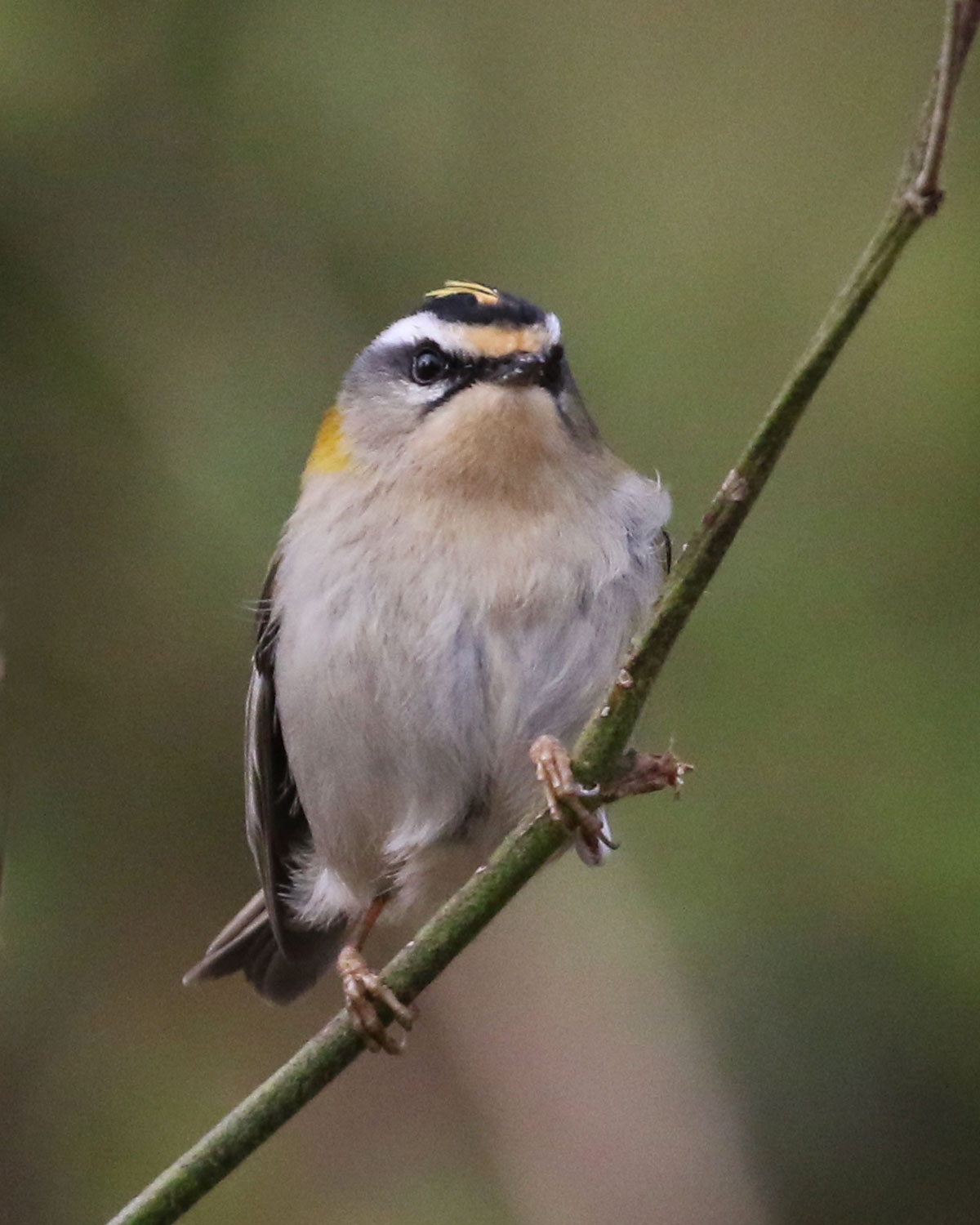

A member of the Kinglet family, the Firecrest's scientific name has a royal ring to it. Regulus ignicapilla translates roughly as the fire-capped little king, a reference to the beautiful orange crown of the male.


The Firecrest is monogamous. The male sings during the breeding season, often with its crest raised, and has a display which involves pointing its bill at another bird, showing the crest and strong face pattern. This differs from the display of the plainer-faced Goldcrest, which bows its head to emphasise the crest.


The breeding territory is about 1.2 acres and may overlap with neighbouring Goldcrest territories. Firecrest will sometimes defend their territories against Goldcrests with the crest raised and a great deal of wing-fluttering, but the amount of actual competition between the species may not be very great.

Unlike more specialised woodland birds which forage on trunks, the crests do not need large woodlands, and their population density is independent of forest size. In winter the Firecrest is less reliant on conifers than the Goldcrest, moving from forest to fringes and scrub. It occurs singly or in pairs, spending much time in the tree canopy, although frequently venturing into bushes and other lower vegetation.


The first breeding of Firecrests in the UK was observed in Hampshire back in 1962.  Since then the species was more likely to be seen on migration, but just recently breeding numbers have significantly increased.  Current figures suggest over 500 breeding pairs but the likelihood is that this number is far greater.  Firecrests thrive in fairly urban areas on the continent, provided that suitable habitat is available in parks or large gardens.  Locally around Four Marks they are more likely to be found in gardens, showing a preference to Holly trees rather than the dense conifers

Leaving the Firecrest I continued out into the open fields away from the houses and gardens.  In the field alongside Old Down Wood there was a group of what I thought initially were Woodpigeons, but as they flew I realised they were Stock Dove.  I flight I was able to count them, there were 19 in total, by far the highest number I have seen on the patch.

Fortunately the Stock Dove flew around and settled back into the field and I was able to get some records of them, both from the road

And from the path that leads into Old Down Wood.


I took the perimeter path to take in the Bluebells that were now coming through, I would estimate that they are currently at about 50% emerged, the blue haze still entwined with the green.  Here is a selection of the best views as I walked around.


One other plant I was looking for was the Early Purple Orchid.  As you can see it is yet to flower, but won't be far off.

A Yellowhammer called from the top of the trees on the edge of the wood.  It is not usual to see them here so the numbers must be expanding.

While there were a few Blackcaps singing amongst the resident Robins, Wren, Blackbirds and Song Thrushes, the dominant singer was the Chiffchaff.  Setting up territories, their songs were essential in letting those that look to move in and take over.


This is the best time of year to photograph them with just the emerging leaves to provide the scenic accessories


This shows very clearly the short primary projection of the Chiffchaff aside from song one of the more reliable ways of telling the Chiffchaff from the closely related Willow Warbler.

It was a pleasant two hour walk, only shame was the sun decided to hide behind clouds and there were no butterflies.

Monday, 28 March 2022

24th March - A Freight Train Running Through the Middle Of My Head

 It has been a while, much has happened.  The first of which is some sad news, our blackbird of up to eight years has disappeared.  He was last seen continually fighting with another male, that male is about and is quite tame enough to come close to the house for meal worms, but THE Blackbird has not been seen for four weeks, I can only hope he will maybe turn up, but he and his partner of last year are missing.

The good news is that the Robins are still about and they are clearly getting ready for breeding with partners feeding the other.  "Donald" is currently the tamer, coming to the back door, while the other keeps its distance, but as the breeding season hots up I am sure that will change.

It was because of the other regular that I went out at lunchtime, parking at the pond where there were some changes, probably as a result of the storms through the later part of the winter.  This tree bough broken off and fallen in the pond itself.

On the water there were five pairs of Mallard, but it was on the bank, the sunny bank where there was activity of interest.  The first Bee Flys of the year, nectaring on the Lesser Celandine.


Walking to the wood there were Brimstones flying past me, but as usual at this time of year they were not stopping, only teasing as they hovered around the celandines to check whether or not it could be a butterfly.  The only other butterfly seen on the walk was a couple of Peacock, there was though a Small White in the garden as I set off.

Walking into the wood I was greeted by the song of several Chiffchaffs, but above these were the 'kronking' calls of Raven and above the wood were six Raven circling and calling to each other.  Here are three of them close together.


As mentioned earlier the reason for coming today was to look out for another long term resident, the Tawny Owl.  Unfortunately the tree was empty but there were positive signs in dropping down the trunk of the tree.

As I walked away from the Owl's tree I passed a clump of Holly where a Firecrest was singing.  It soon became clear that there could be too and when one appeared it was evident they were not happy.  The photographs taken were of one bird, I never actually saw the other.  The full portfolio of the photographs are found on my other blog, here is a selection of the gorgeous bird that has become a regular occurrence around the village.


As I left the wood a Nuthatch was calling rom a telegraph pole, interestingly the same telegraph pole Starlings were using as a nest.


A short but rewarding walk, hopefully I can catch up with the Tawny Owl soon.

Friday, 30 April 2021

22nd - 30th April - With Feathers All Stubby and Brown

The dry spell continued along with the cool temperatures.  If you managed to get out of the wind and found a spot in the sun it was quite warm though.  These spots were where the butterflies were.  A trip to the pond on the 23rd found this gorgeous male Orange-Tip nectaring on the cuckoo flower that was around the edge of the water.


Then left the Cuckoo Flower to take advantage of the flowering  periwinkle.

A pair of Chaffinch have been present for a while just by the parking area at the pond, they are probably nest building at the moment.


The sunshine has also moved the Bluebells on in Old Down Wood, although they are still a little way behind where they were this time last year, the cool conditions probably holding them back a little.  Never mind the display is building up quite nicely as you can see from these shots taken on the 23rd and 26th.


Signs keep cropping up around the fields, a new practice and probably a sign of the times, this one at the west end, nice to see a wildlife strip left though.


Despite the plentiful sunshine, butterflies have been hard to find in Old Down, the most numerous have been the Peacock, but they are now coming to the end of their first flying season.


A willow Warbler was singing from the top of the larches in Old Down Wood on the 30th, the first I have ever heard / seen in the wood, probably a migrant moving through.  The Chiffchaff though is present all over the wood, the monotonous song coming from almost every ten metres.  This individual showed really well for me on the 23rd.


The other numerous bird in the Wren, again their explosive song giving away their presence.  This individual, though appeared to be a little agitated and was making itself look big by spreading the wings and tail while calling in alarm.  


It was looking down into the bramble and dead bracken, I wondered if maybe there was an adder that was causing problems, unfortunately I will never know.


The larches in Old Down Wood look spectacular in the midday sunshine against the blue sky.


And the beauty of the pond.


The afternoon on the 23rd I walked down Brislands and then up GIlbert Street and back through Old Down.  Several Orange-Tip flew past us as we walked down Brislands, but at the bottom of the lane one finally stopped and showed well.


There had been several Holly Blue, with five counted, but none of them stopped until finally at the junction of Court Lane with Gilbert Street one did stop and provided me with some of the best Holly Blue photos I have taken.


You could hear the lambs before we could see them, but looking over the gate the field was full of them, some enjoying the sunshine.


While others were just up to no good!


The 26th saw a surprise at the pond, eight Mallard duckling with their mother feeding amongst the Iris bed.  Mallard have only recently become a fixture on the pond, and I have only ever confirmed breeding once before and unfortunately they were not very lucky.  What will happen to these eight ducklings remains to be seen.


The drake takes no part in raising the young ducklings and there were three drakes around the pond.  Disturbingly on drake decided to attack the mother duck, chasing her around the pond and even to the point where she flew off into the adjacent field.  The ducklings stayed in the iris bed and the mother returned only to be attacked again.  This ended though when I threw a stick at the drake!  I know I shouldn't get involved but I couldn't let it continue

On the 30th unfortunately eight had become four.


One piece of good news, the Long-tailed Tit nest that I thought had been attacked and abandoned is very much alive.  I could see movement in the nest and witnessed this adult bring in insects.


Back to the 30th and as well as the ducklings at the pond there was a Firecrest singing by the footpath.  This is the third one I have now found around the patch and of course it performed very well.  Another batch of photographs to the Four Marks Firecrest collection.


Seeing the Tawny Owl has been rather hit or miss lately so I decided on the 30th to check the tree once again.  As I walked up I could see the owl almost immediately, still behind some branches but more visible than usual.


It wasn't though until I got home I realised that there was in fact two Owls in the tree, the other hidden above the prominent one.


I wonder where the owlets are?  Maybe still in the nest hole at the moment but could be about soon.

That was April, a very dry, sunny and cold month, with a record number of frosty days.  May looks like starting with some indifferent weather.  May can also be indifferent with sightings around the patch, we will just have to hope for something special.