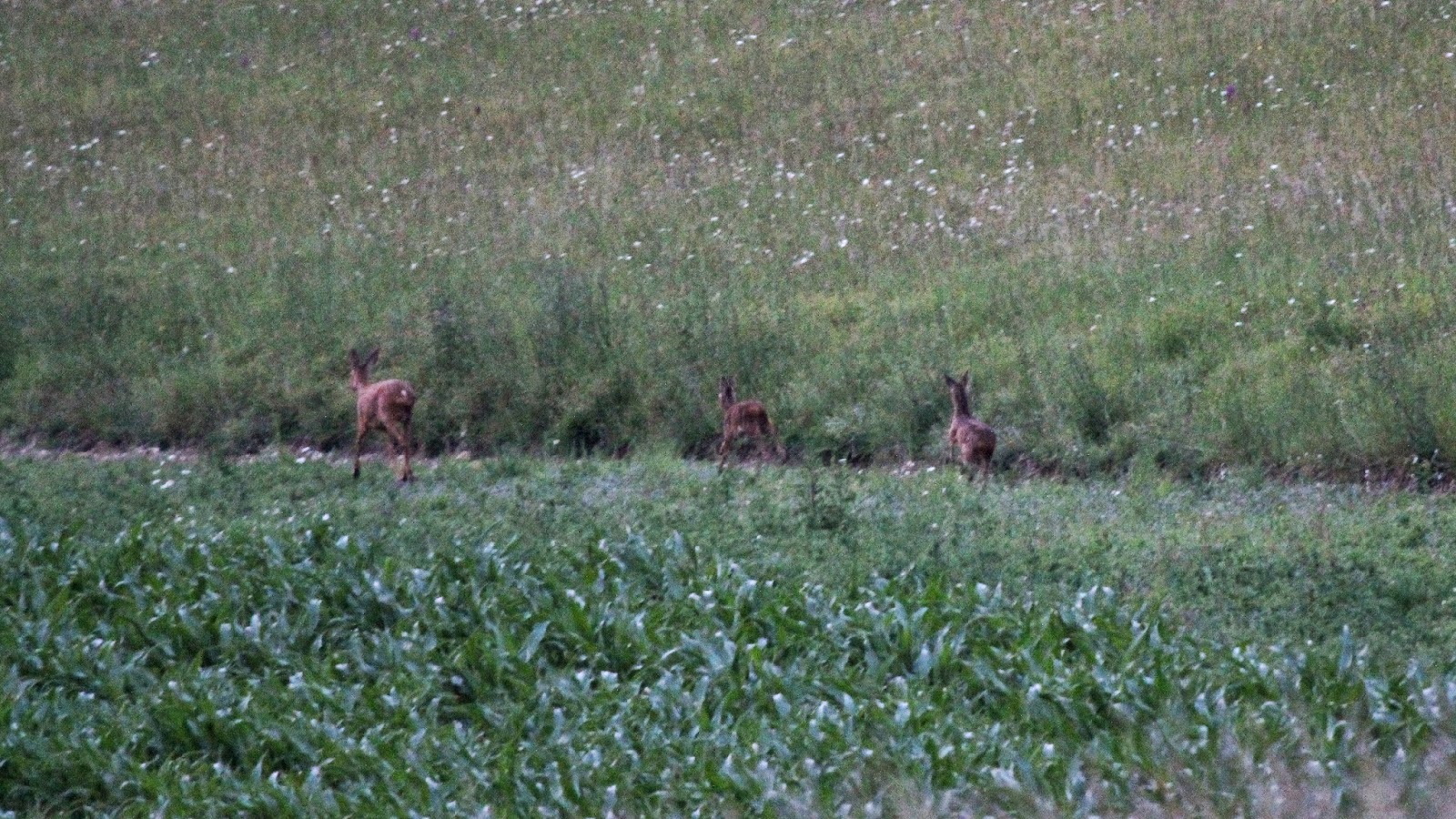
The weekend was a mixed bag, sunshine and showers, but not to the point where they ruined the day. On Saturday I had an amazing experience, I was Louise's guest at Lords for the bicentennial celebrations and the MCC v R.O.W.game. Access to the Pavilion, Committee Room and Long Room. We met some old, some not so old, and current cricketers, and had a wonderful time. Consequently my ability on Sunday was impaired, so I did not manage to get out.
The last two days have been mixed too, with rain and more sunshine. Last night Ian and I went to see Chris Packham in Winchester, he did not disappoint, a mixture of some wonderful photographs, and thought provoking comments. He adopts an approach that looks to address the balance needed when faced with the challenges of conservation in our world, while at the same time, telling it as it is. When I got back the rain showers looked to have stopped so I put out the moth trap, and while the numbers were nothing like those I have been getting in the warm weather, there were a few new moths.
Of course there were the usual, Heart and Darts, Grey Arches and an Elephant Hawk-moth, but the the first one to catch my eye was this small moth, about a centimetre long the markings were very detailed for such a small insect. It only has a Latin name, and is I think Scoparia Pyralella, although there are similar others in the family. It is apparently common in chalk-land habitats.

Next was a very pale Heart and Club.

This one is a moth I caught last year but my first for this year, the Buff Arches, a beautiful insect with extremely delicate markings that form the arches that give it it's name.

The Clouded Borders I catch always seem to get away before I can photograph them, but this one stayed put for once, maybe due to the coolness of the morning.

I have caught one of these before, the Flame.

and finally two new moths, this is I think a Willow Beauty, the confusion species is the Mottled Beauty, but I believe this is not as detailed as the Mottled and therefore is the Willow. Photographed on the egg box, because in previous attempts to move them they have flown off.

And this one is a Bright Line Brown Eye.

Around the south coast estuaries waders are starting to return, the ongoing event of bird migration beginning to go into reverse, those birds that nest and breed in the northern hemisphere having completed their duties, and have started the journey to the areas where they can find food until the urge to breed again overtakes them in the spring next year. This takes the bird watcher out of the June doldrums, and provides that added stimulus to get out and find that rare visitor.
Unfortunately here in Four Marks we don't have the water to attract the waders, so the summer doldrums last a little longer. For the time being I am being kept interested by the moths and butterflies, but always in the hope that something will catch the eye, or turn up unexpectedly. In the garden Blackbirds are turning up tail less indicating that there breeding season is coming to an end, and the moult is a huge necessity. Young Green Woodpeckers call from distant trees, and parties of Long-tailed Tits call from within the hedges, another sure sign we are in full summer.
I had intended to take a lunch hour walk in the hope that there would be some butterflies about. The forecast had been good for today, so the challenge would be to find those two classic full summer woodland butterflies, the Silver-washed Fritillary, and the White Admiral, and maybe something else. Through the morning though there was a fresh wind, and plenty of cloud, but as midday approached there were signs of breaks in the cloud, and I decided to drive to the pond, park there and walk through the woods.
Getting out of the car I noticed the Moorhen family feeding amongst the lily pads. Unfortunately there are now only two chicks, and each adult was looking after a chick.

As I walked away from the car the adults panicked and shot into the iris bed, leaving the youngsters in the middle of the lily pads, no wonder there are now two!
I walked around the side of the pond, the sunny bank was busy with flies, Small Tortoiseshells and Azure Damselflies.

There was no sign of any dragonflies, so I decided to head for the woods. Before I went in I walked along the edge of the field opposite Old Down Cottage. This is a good spot for butterflies, especially Marbled White. There were plenty of Meadow Browns and Ringlets showing, and the Knapweed is coming into flower attracting the hover flies.

But unfortunately not the insect I was looking for, the Marbled White. One did fly by, but as seems to be the case early in the season, it didn't stop, and just flew through. There were plenty here last year, but the edge of the field was cut early, and maybe that has had an impact.
There was though a Small Tortoiseshell, the butterfly of the year so far if you measure that in numbers.

The Cow Parsley was also very busy, with the first Soldier Beetles of the year, or Blood suckers as they are colloquially known.

The purple flowers of the Self Heal are out amongst the grasses.

I left the field, and walked into the wood, a Comma was sitting in the sun on the bramble, the butterflies were starting to come thick and fast now.

The wood was quiet, the only bird song being the eponymous call of the Chiffchaff somewhere in the centre of the wood, while the wind blowing through the trees provided the other soundtrack to what was a typical summer scene. Despite the relative silence there was plenty of activity. Meadow Browns were everywhere in amongst the grasses and nectaring on the bramble flowers.

The whites are also beginning to increase, and this Large White female was sitting on the leaves in the sun.

Then in pretty much the same location as I had seen one a few days ago I found the first of the target butterflies, the Silver-washed Fritillary. It was nectaring on the bramble flowers.

This was the best view I managed to get of the under wing, and the silver coloured wash that gives it the name.

A beautiful butterfly that lights up the surrounding greenery.


It was buzzed by a Meadow Brown, and took off in pursuit, to be replaced by a smaller orange butterfly. A skipper, and this one is an Essex Skipper.

I walked along the north south path with the sun lighting up both sides of the ride. Meadow Browns were everywhere. My attention was taken by a large dragonfly, that didn't stop, it didn't look as colourful as an emperor, but I will never know. When I thought it had come back it turned out to be two Spotted Crane Flys coupled together.

A Red Admiral flew past me, and settled again on the bramble flowers. Looking a little worse for wear it nectared on the flower.

There have been reports that the seasons are slightly out of sync, and that autumn appears to be coming earlier. A sign of this here in Old Down were the ripe Raspberries in amongst the bramble.

I walked along the path to the west, there were more Meadow Browns and a few Ringlets, and this Small Skipper. The number of different butterflies seen so far was now up to ten

I turned to check the other end of the footpath. As I approached the crossroads a Robin flew up to the footpath post. As it perched there I managed to catch it as if it was taking a direction from the sign, looking up as instructed.

I stopped in the sunny glades to view the bramble bushes, and a pair of Blackcaps appeared, and then almost as quickly as they appeared they disappeared into the dead branches.
Where the sun shone through there were plenty of bees and hover flies, and they would stay almost motionless in the sunshine. This was a challenge for me, could I focus on one? It wasn't until I saw the pictures at home that I realised I was looking at it from behind.

I came back and took the path towards the Kitwood entrance. An open area of bramble was in the sunshine and as a result there was plenty of insects. An Emperor Dragonfly flew around the area, and this Speckled Wood sat in the sunshine.

A large butterfly flew past the tops of the Sweet Chestnuts, and I thought it might be the second target. I had a couple more glimpses and was convinced, but then it appeared on a flower about two metres from me, a White Admiral.

It didn't stay long, and I walked on satisfied I had found my quarry, and pleased they were back. I had seen them in this location last year, and worried the winter work may have killed them off.
A little further on, another patch of bramble, and another White Admiral, this time much more approachable.

I was able to get even more closer.


Both targets successfully in the bag I headed back out of the wood, across the field, and through the little paddock that is now full of clover, buttercups and trefoil, but despite walking around it, all I could find were Meadow Browns, never mind there is plenty of time for the Small Copper.
I walked back to the pond, and then up to the field again, still no Marbled Whites so I decided to make my way back to the pond and to check the sunny bank once more. A Ringlet was being chased by a small orange butterfly, but I couldn't be sure if it was just a small tortoiseshell. The Ringlet gave up the fight and settled on some unripe blackberries.

I then found the small butterfly, and it wasn't a tortoisehell it was in fact another first for theyear, a Gatekeeper. A little bit worse for wear, but a welcome find to round off a productive hour, twelve butterflies, and two new for the year.

As I walked back to the car the Moorhens were back out in the open, the two chicks staying close to the adult, I wouldn't bother they will be off at any sign of danger!

Late afternoon while in my office I noticed a large raptor drifting towards the house. As it closer it soon became clear it wasn't a Buzzard but a Red Kite, and I managed to grab the camera and get a record silhouette before it drifted over the house and out of sight.

Not a bad day...